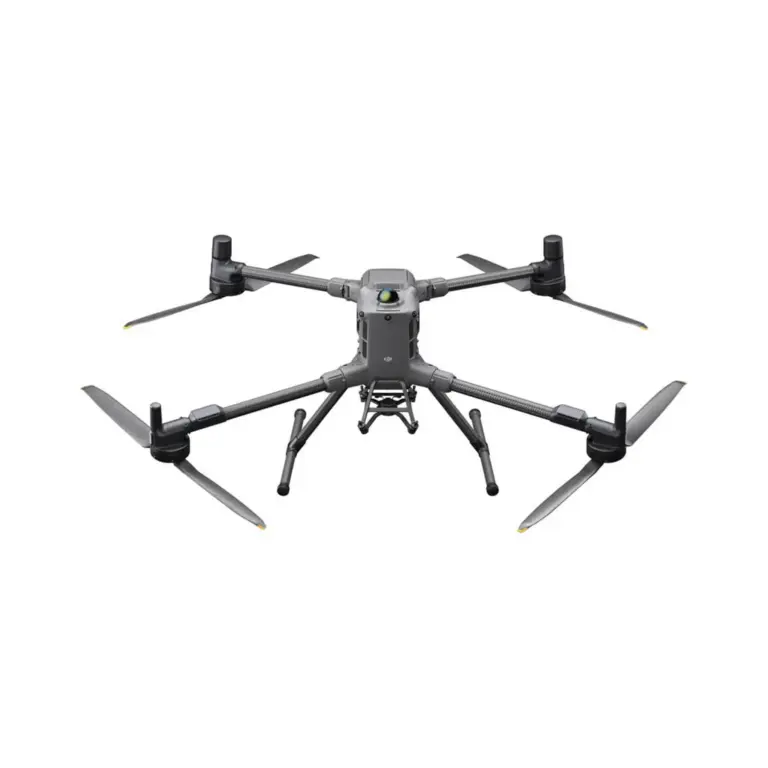
PRE-ORDER MATRICE 30 ZÉPHYR PARACHUTE With External FTS
The lightest parachute system on the market: only 330 g!
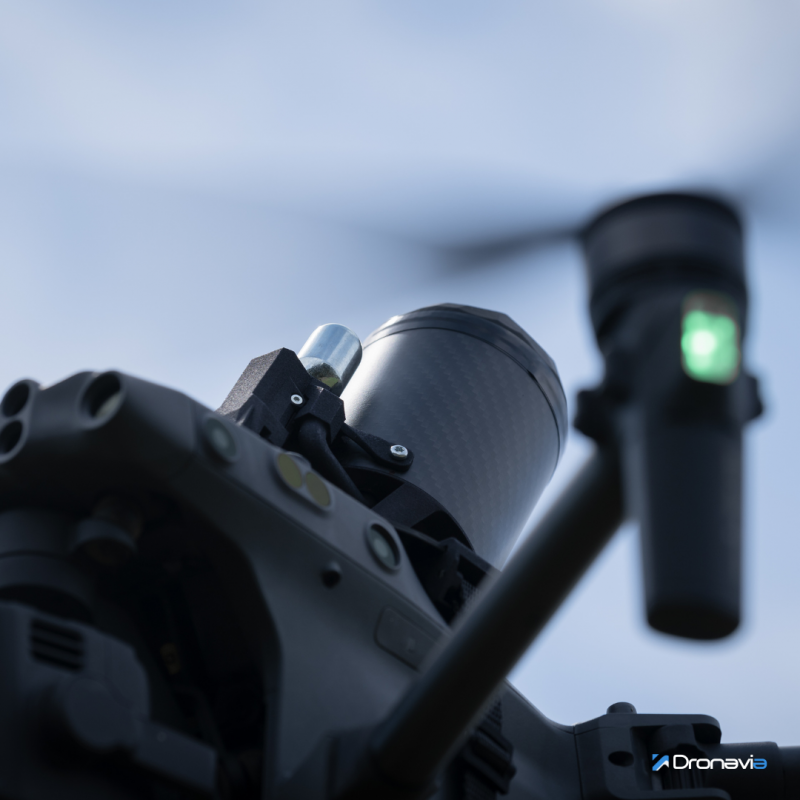
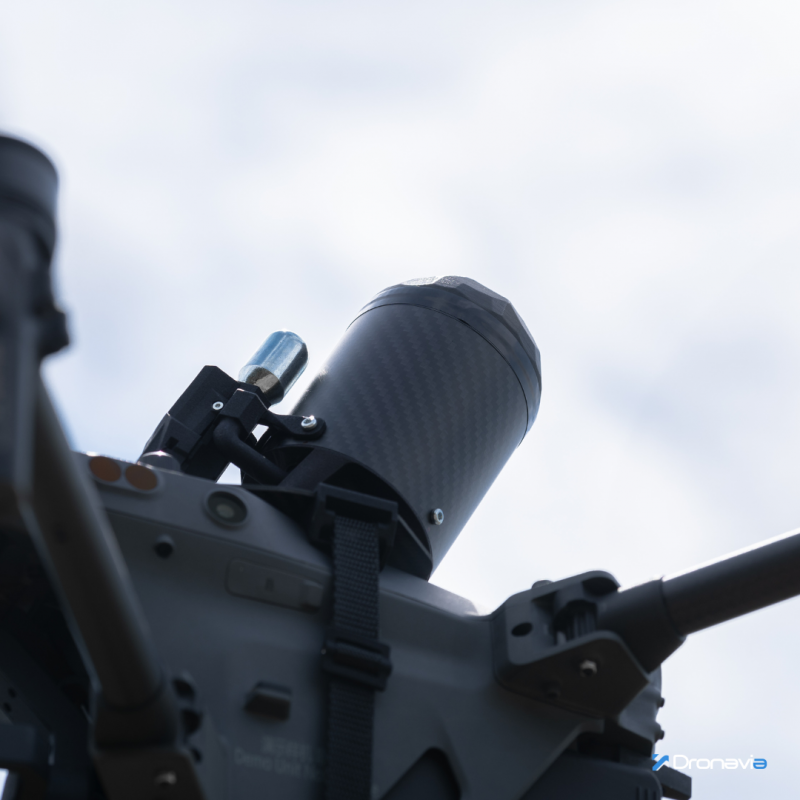
The basic parachute kit includes an ultra-fast CO2 canvas ejection system and a dedicated autonomous remote control with 30 hours of autonomy (attachable to the Smart Controller). The parachute is also available as a DGAC S1 S2 S3 approved kit with an external FTS (self-installable). Each version of the FTS includes an audible alarm and a charging socket to power and charge the parachute when the drone is on, providing unlimited autonomy.
The lightest motor-off parachute system in the world!
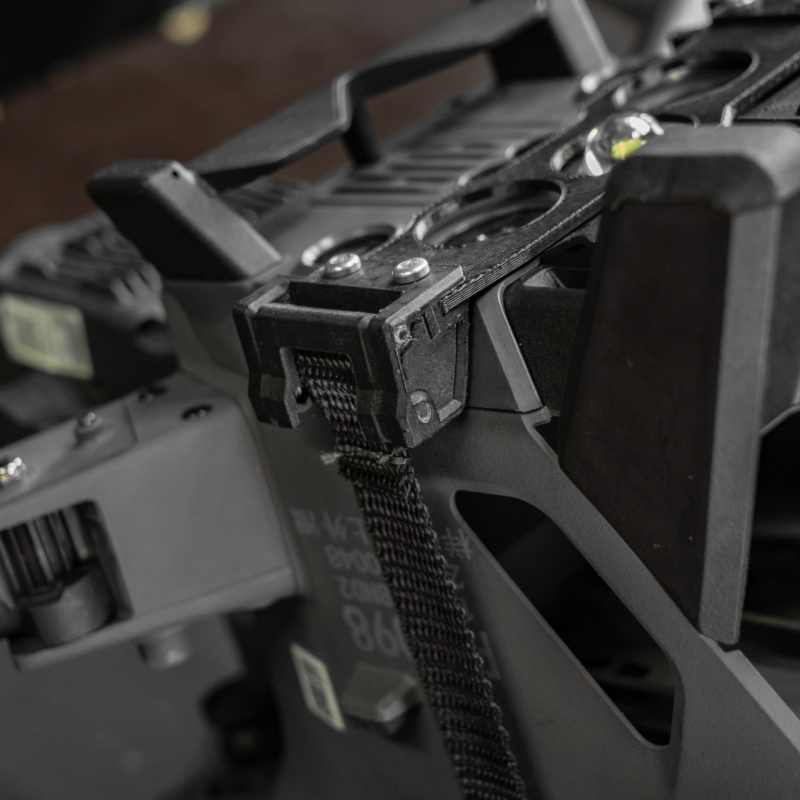
The parachute + external FTS kit is the lightest solution available on the market, with a total weight of only 385 g. Pilots have the ability to carry more than 500g of payload, in addition to our safety systems, while still meeting DGAC S2-S3 approval (total in-flight weight of 4.7kg). The S1/S2/S3 approval proposed by Dronavia is the only one on the market that allows the transport of payload. Keep in mind that for an equivalent payload, the flight time with the Zéphyr parachute is longer than with any other parachute system. The external FTS is self-installed between the batteries and the drone. Its operation is reversible, does not modify the drone and allows DJI's manufacturer warranty to be maintained. The FTS can be used alone, without a parachute, to increase the available payload and flight time for the S2 scenario. The payload capacity of the Matrice 30 in the S2 scenario increases to 960 grams in this configuration! The acoustic alarm module connects to the USB-C connector on the bottom of the drone.
A very quick installation of the system
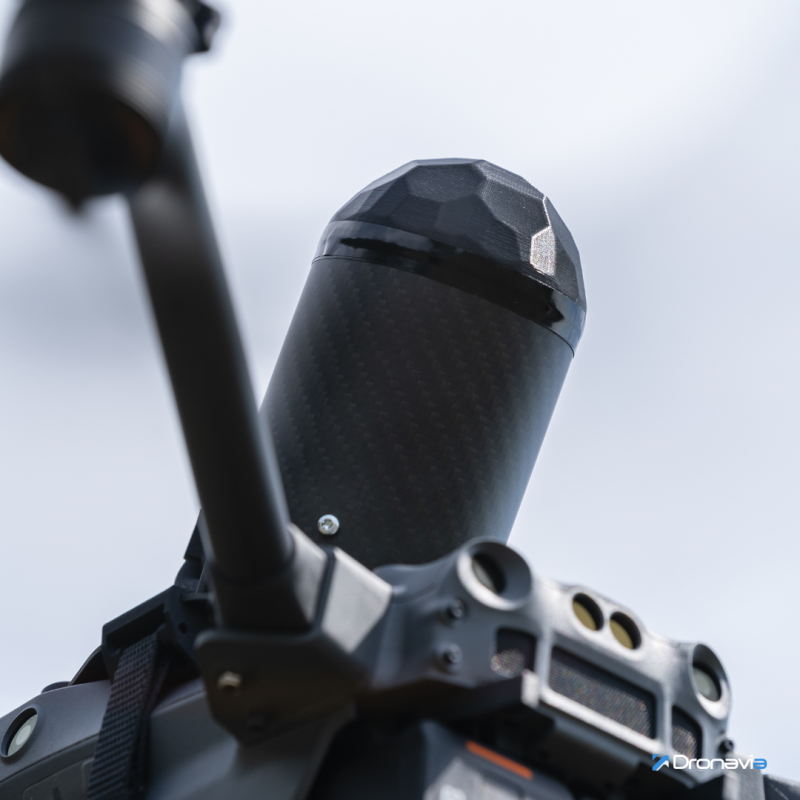
The parachute is attached to the 4 upper threads of the drone and can be disassembled in less than a minute, without having to go to the workshop. An optional bracket is available in our shop to attach it to the bottom of the drone when using the upper pod. The kit with the FTS can also be disassembled in seconds. The fuse module is easily inserted between the batteries and the drone. It immediately includes the audible alarm. It weighs 55 grams.
The fastest, most reliable and most efficient CO2 system
The Zéphyr parachute CO2 system has been tested and used by most French drone pilots for more than 5 years. Countless tests and successive improvements have brought this system to a level of reliability never before achieved on a drone parachute. Pressurised gas (60 bar!) is released in a fraction of a second to propel the parachute tissue out of its container. The excess gas released (each cartridge contains several dozen litres) is used to accelerate the canopy and minimise height loss when the parachute is activated. The system can be reset within seconds. The CO2 cartridge is the only consumable that is replaced after an implementation on the system, and a cartridge costs only a few euros. There are no restrictions for professional pilots travelling by air. Most airlines offer the option of placing your Zéphyr M30 system in the hold or cabin with the 4G gas cartridge.
On the Zéphyr M30 double canopy parachute system, the CO2 release system allows the canopies to be ejected and opened in just 0.83 seconds, equivalent to a 10-metre height loss at an initial drop speed of about 6 m/s.
The lightest, most stable and efficient drone canopies
The new PARA² canopies used in Zéphyr parachute systems are the result of 3 years of development. Their innovative ultra-lightweight design and unique construction give PARA² canopies superior efficiency and stability. On single canopy systems, the fall rate is minimised in proportion to the canopy surface area. When used in pairs, PARA² canopies do not interfere with each other and optimise the overall sink rate. Each Zephyr parachute is designed so that the canopy(s) keep the drone as flat as possible during its fall to minimise damage on impact.
On the Zéphyr M30 dual canopy parachute system, the fall velocity for a mass of 4.2 kg is only 5 m/s, i.e. an impact energy of only 55 joules, much lower than the maximum 69 joules allowed in France.
An encrypted long-range communication system
The long-range communication system between the radio and the parachute is based on advanced technology and LoRa modulation. The range reaches 5 km in optimal conditions and a long-range option allows it to exceed 10 km. The communication protocol is based on 869 MHz frequencies, which are free of authorisation (options 433 and 915 MHz available). A 128-bit encryption ensures that data is not intercepted and the user is alerted if communication is disrupted. Practical user features The parachute, FTS and radio control modules are equipped with LEDs for status indication and advanced functions.
The LEDs indicate the remaining battery charge when switching on and off and the battery level while charging. In operation, they indicate the immediate status of the system: correct operation, loss of radio link, battery low... In combination with an FTS, the parachute is automatically switched on when the drone is switched on. If there is no signal and you forget to switch off the parachute or radio control, the modules will switch off automatically after 10 minutes. A time-stamped log system is integrated on the parachute and radio. It records activation actions performed by the user for diagnostic purposes.
Many options... ahead of regulations!
Thanks to the options available with Zéphyr parachutes, you are one step ahead of French and European regulations. On the remote control side, it is possible to add a second redundant release button. This second button avoids unwanted pressing of a single button and doubles the autonomy of the remote control. Safety caps protect the buttons from unintentional pressing. A buzzer module is available on request. It generates an audible warning in case of loss of connection to the parachute. With a long-range option, the radio range can be extended to more than 10 km if required. It is also possible to link several radio remote controls to one parachute, or several parachutes to one remote control.
On the parachute side, a crash detection and automatic deployment module is available on request. This module will eventually be compatible with ASTM3322 and future European standards (classes C5 and C6 for STS-01 and STS-02 scenarios). Dronavia is anticipating the new European regulations by bringing its autonomous engine shutdown system (Zéphyr CC M30) into compliance with MOC 25-11. This approval will allow professional pilots to simplify the process of obtaining a SORA.

 EN
EN  NL
NL  FR
FR  DE
DE  ES
ES