About products
1. What products do you have and what are they for?
Made for robot enthusiasts and robot beginners, the Go1 Air and Go1 Pro fall into the consumer market.
The Go1 Edu version is aimed at education and scientific research, entertainment, fun to play and robot researchers and developers.
The AlienGo and B1 are mainly intended for industrial applications (site inspections, such as substation inspections, surveying and mapping in construction, etc.), e.g. in the electricity, petrochemical and coal industries, as forward-looking industrial technology.
The Z1 robot arm series is ideally suited to work together with the AlienGo and B1 (the most suitable robot), four-legged robots and other mobile robots to perform complex tasks and explore various application scenarios.
2. How far is the remote control?
With the standard controller, it is like connecting to a Wi-Fi hotspot. The range for the phone connection to the robot dog is about 50 to 60 metres. With the enhanced controller, under unobstructed and interference-free conditions, you can control the robot dog up to a maximum of 500 metres to 1 kilometre, but in normal conditions, a range of at least 200 metres is achievable.
The improved controller is a mini-handheld ground station, similar to the DJI RC Pro for drones, making the remote control capabilities much stronger.
3. Can the robot dog climb stairs?
All stair runners can climb stairs, the maximum height they can climb is:
Go1: 12 cm (4.7 inches)
AlienGo: 18 cm (7 inches)
B1: 20 cm (7.9 inches)
Note: Boston Dynamic spot: typical 7-inch rise for 10-11-inch
4. What is the maximum speed of the robot dog?
Go1: 4.7 m/s (10.5 mph)
AlienGo: 2 m/s (4.47 mph)
B1: 1.8 m/s (4 mph)
Note: Boston Dynamic advertising: 1.6 m/s
5. Is the robot dog holder dustproof and waterproof?
Only B1 is supported, other models are not.
6. What is the maximum payload of the robot dog?
Go1: 3-5 kg (6.6-11 lbs)
AlienGo: 10 kg (22 lbs)
B1: 104 kg (229 lbs)
Note: Boston Dynamic spot: 14 kg (30.9 lbs)
7. Which sensor can be placed on top of the robot dog?
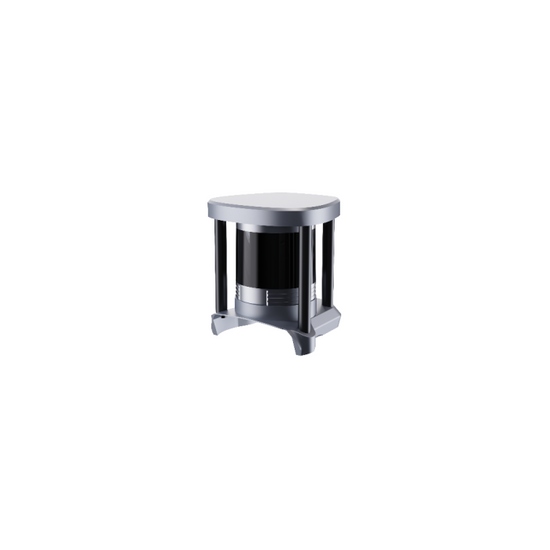
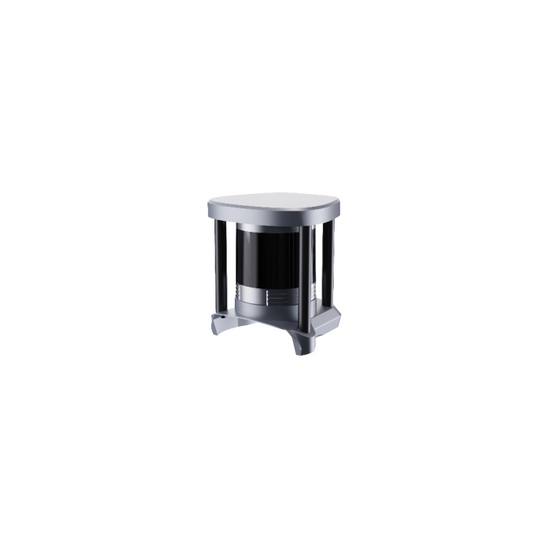
For Go1 Edu, we provide Go1 Edu Explorer. Go1 Edu Explorer is based on Go1 Edu, but supplemented with accessories such as NVIDIA Jetson NX with software and Lidar with software.
After lidar installation, Go1 Edu Explorer supports dynamic obstacle detection, navigation planning, map building and self-positioning. After installation of NX, Go1 Edu Explorer supports gesture recognition, VSLAM and professional secondary development (machine learning, etc.).
The Go1 Edu also supports a high-resolution image transfer system (similar to DJI drones) and a person tracking function (using a wireless vector positioning system). The Go1 Edu can handle uneven terrain and perform various movements, such as rolling, jumping, upside down, walking, fast walking, running, and so on.
The customer can also add other sensors, such as gas detection sensor, laser scanner, speaker, warning lamp, thermal imaging camera and powerful search lamp, etc., for various applications.
8. Does the robot dog support 4G/5G and GPS?
Currently, only the Go1 Edu 4G and the B1 support 4G and 5G, and only the B1 has built-in GNSS for GPS support. Customers must build their own server to use 4G or 5G functionality.
9. What is the voltage and amperage of the external power supply for Go1 Edu?
Normally, we need a stable DC power supply (24V, 20A-30A) for the Go1 Edu, and the connection port for the cable is XT30 or XT30U.
10. What is the camera on the robot dog?
Go1 Edu with 5-group fisheye camera (camera developed by Unitree Robotics).
AlienGo equipped with 3-group cameras, 2-group depth sensors (Intel RealSense D435) and 1-group visual remote camera (T265).
B1 equipped with 5-group sensors (Intel RealSense D430).
11. Does Go1 Edu support all types of navigation APIs? What is the difference between Go1 Edu, AlienGo and B1 in terms of support for this SDK/API?
We did not release an SDK/API related to navigation on GitHub, because navigation is LiDAR-based and we normally ship all software together with the robot dog. Unitree_legged_sdk is our core API for high- and low-level control, and this API supports all models.


 EN
EN  NL
NL  FR
FR  DE
DE  ES
ES